

Think tinted windows make you invisible? They don’t.
Stealth camping isn’t just about daytime looks — it’s about stopping light from escaping at night and keeping fresh air inside.
For car and van campers, the right window coverings and vents matter more than you think.
This post walks through which materials work, how to fit them, and quick checks to catch leaks before dark.
Read on for practical steps that keep you unseen, safe, and breathing easy.
Window Coverings, Ventilation And Privacy Materials
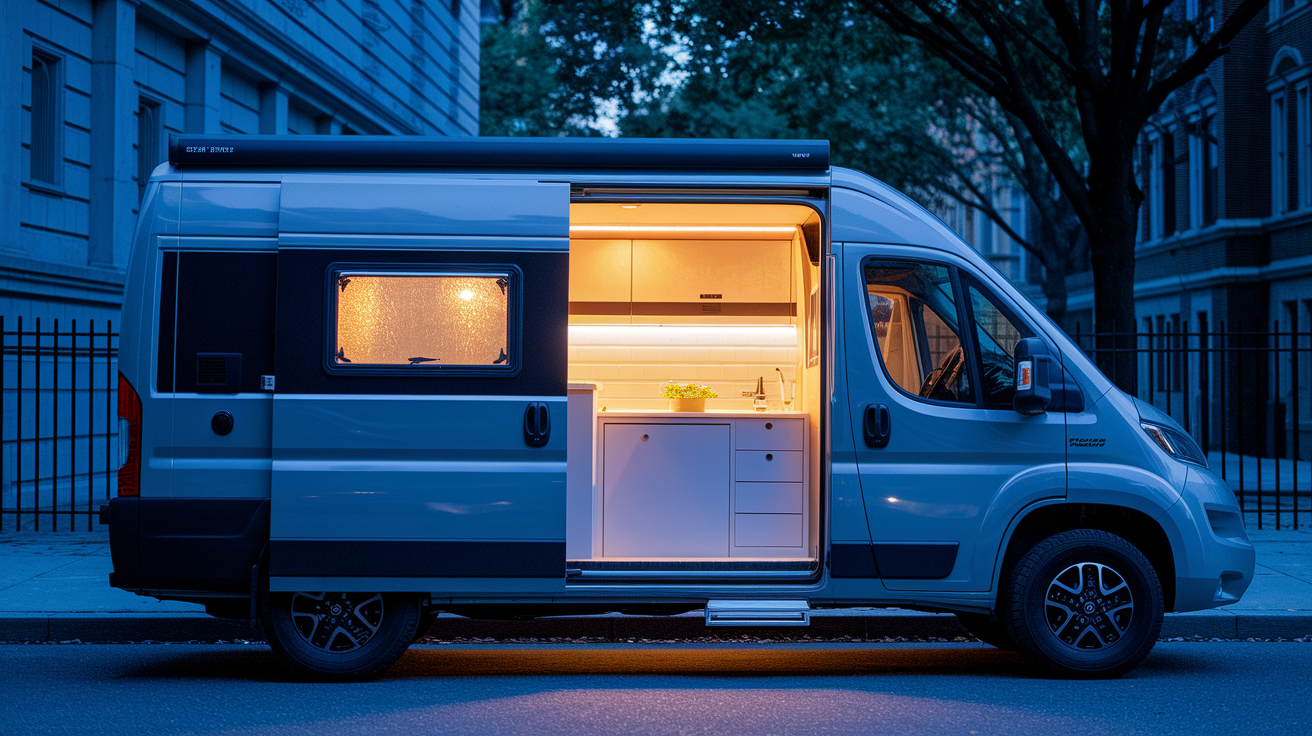
Tinted windows alone won’t cut it once the sun goes down and your interior lights are on. That’s the trick people miss: privacy at night comes from blocking light from escaping, not just blocking light from coming in. You need actual coverage on every window, from the windshield to the back doors, and it needs to be opaque enough that nobody walking by can make out shapes or movement inside.
Reflectix is the go-to for a reason. It’s cheap, it insulates against heat and cold, and it blocks light in both directions when you cut it to fit each window and secure it with suction cups, magnets, or a snug friction fit. Blackout curtains work too, especially if you want something that looks more like a normal window treatment from outside instead of a car that screams “someone’s hiding in here.” Some people combine both, Reflectix against the glass for insulation and blackout fabric layered over it so the whole setup reads as curtains rather than foil.
Whatever material you use, check the fit at dusk before you’re relying on it. Sit inside with your lights on and walk around the outside of your vehicle. Any glow, any gap, any sliver of light leaking through a seam is exactly what catches someone’s eye at 11 p.m. It only takes a few minutes to check, and it’s a lot easier to fix a gap in daylight than to notice it after someone’s already knocked on your window.
Ventilation matters just as much as coverage, and it’s easy to get wrong. A sealed-up vehicle with no airflow gets stuffy fast, and condensation builds up on cold nights no matter how careful you are. Crack a window an inch or two on opposite sides of the vehicle if you can, use a vent fan if you’ve got one installed, and never run anything that burns fuel, no propane heaters, no charcoal, nothing, inside a closed space overnight. Carbon monoxide doesn’t announce itself, and that’s the risk that actually kills people, not the cold.
If you’re worried about the balance between airflow and visibility, look for covers with small mesh vents built in, or crack a window just enough for air without leaving a gap wide enough for anyone to see in. A cracked window covered by a curtain from the inside still lets air move while keeping your setup dark from the outside. It’s a small adjustment, but it’s the difference between waking up groggy from bad air or waking up because someone spotted you through a two-inch gap you forgot to cover.
Final Words
Start with the nine-step “Before You Sleep” checklist: confirm legality, pick a low-conflict spot, park considerately, install opaque window covers, finish bathroom and food tasks elsewhere, enter quietly, ventilate safely, avoid idling, and leave early.
Then evaluate locations by comparing residential streets, commercial lots, truck stops, and industrial areas for visibility, activity, phone signal, and easy exits. Check local rules and be ready to comply if approached.
Use these stealth camping tips for car and van campers to keep overnight stays legal, quiet, and safe. Trust your instincts, keep keys handy, and you’ll wake up ready to go.
FAQ
Q: What is the 3-3-3 rule for camping?
A: The 3-3-3 rule for camping is a survival guideline: roughly 3 minutes without air, 3 hours exposed to extreme weather, 3 days without water, and 3 weeks without food.
Q: How illegal is stealth camping?
A: Stealth camping is illegal to varying degrees depending on local rules; it can be allowed, attract warnings, fines, or towing—always check municipal and property regulations before deciding to sleep in a vehicle.
Q: What is the most forgotten item when camping?
A: The most forgotten item when camping is toilet paper; pack an extra roll in a resealable bag, plus hand sanitizer and a small trowel for undeveloped sites to avoid last-minute problems.
Q: What are some tips for stealth camping?
A: Some tips for stealth camping are verify legality, choose a populated low-conflict spot, use opaque window covers, ventilate safely, complete food and bathroom tasks elsewhere, avoid idling, stay quiet, and leave early.