

Think you need trees to camp in a hammock?
You don’t — but the stand you pick changes everything.
This guide lays out the real choices: ultralight staked systems like the Handy Hammock for backpackers, freestanding frames like the Byer Vario or pipe stands for car trips, tripod builds you can scale on site, and simple anchored-pole DIYs.
Pick by how you travel and what kind of ground you’ll camp on: if the soil holds stakes, go light; if not, choose freestanding.
Quick Picks by Trip Style and Setup Needs
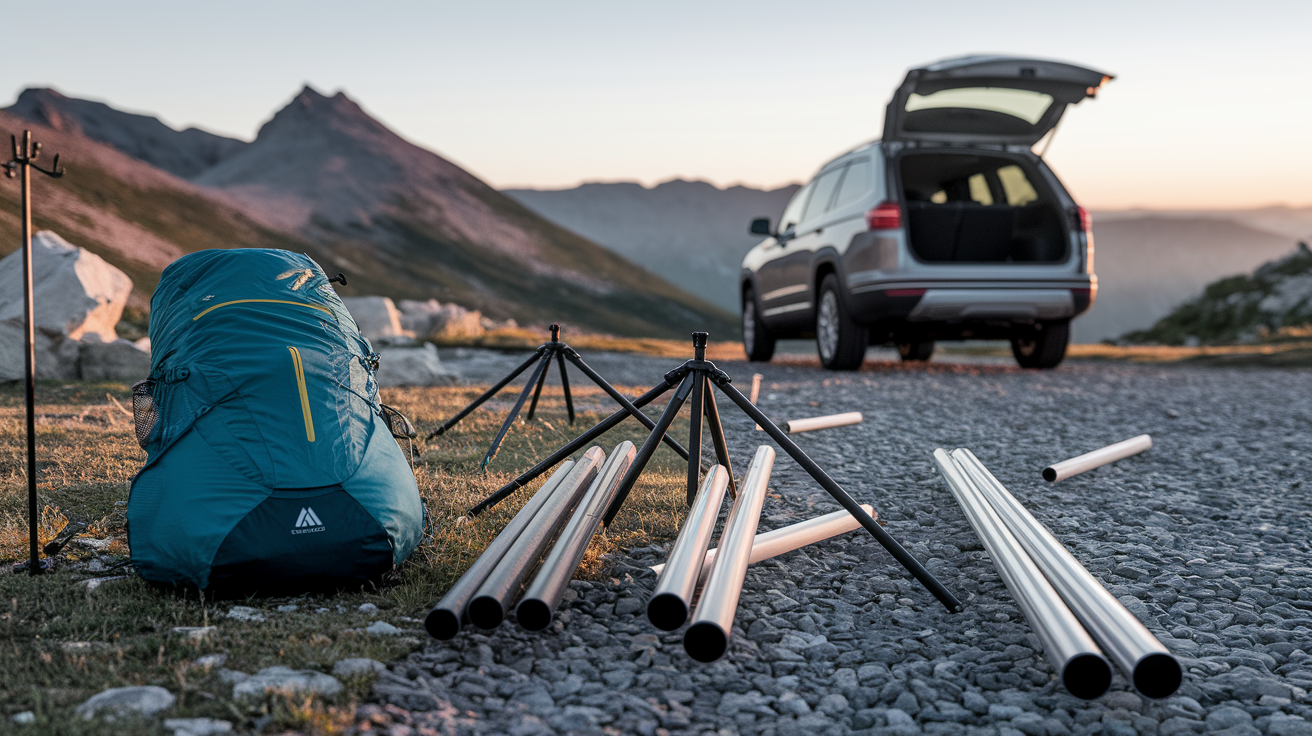
If you’re heading out with a full pack and nothing else, Handy Hammock is the only genuinely backpack-oriented option here. It’s the lightest by a wide margin, and it’s the only one built with trail weight in mind. The Byer of Maine Vario, the Portable Pipe Stand, and the TurtleDog/Tripod all lean toward vehicle-supported camping. They’re not impossible to carry, but they’re built for a trunk, not a pack.
There’s also a real difference in how these stands stay upright. The Byer Vario, Portable Pipe Stand, and TurtleDog designs are fully freestanding once assembled correctly, meaning they don’t need the ground to hold them in place. Handy Hammock and anchored pole setups work differently. They rely on a staked tensegrity structure, so the ground itself becomes part of the support system. That distinction matters more than weight or price once you’re standing on rocky soil or loose sand.
| Stand | Actual Weight | Price | Packed Length | Assembled Span | Capacity | Setup Time | Hammock Compatibility | Anchoring Requirements | Freestanding or Staked | Portability Rating | Pros | Cons |
|---|---|---|---|---|---|---|---|---|---|---|---|---|
| Handy Hammock | ~1 kg | ~$99 | Not stated | Not stated | Not stated | Not stated | Requires confirmation | Stakes required (beach stakes available) | Staked | Backpack-oriented | Extremely light, true pack-friendly size | Needs solid staking ground to function properly |
| Byer of Maine Vario | Not stated | ~$180 | 5 pieces | Up to 180 in / 457 cm | Not stated | Not stated | Requires confirmation | None (freestanding) | Freestanding | Car-portable | Adjustable length, easy one-person setup | Bulky legs don’t pack flat, some pole flex under load |
| Portable Pipe Stand | Not stated | ~$180 | Six 6 ft / 1.8 m sections | ~12 ft / 3.7 m | Not stated | Not stated | Requires confirmation | None (freestanding) | Freestanding | Car-portable | Very rigid, minimal flex, sturdy tarp support | Heavy steel components, long packed sections |
| TurtleDog / Tripod | Not stated | $0 to several hundred dollars | 3 pieces | Not stated | Not stated | Not stated | Requires confirmation | None (freestanding) | Freestanding | Bulky vehicle transport | Scalable design, buildable from on-site materials | Cost and weight vary widely, limited spec data |
| Anchored Pole DIY | Not stated | $40+ | Not stated | Not stated | Not stated | Not stated | Requires confirmation | Stakes required | Staked | Bulky vehicle transport | Low cost, simple two-strut build | Anchoring is critical, not freestanding |
So if you’re backpacking, Handy Hammock is the pick, as long as you’re camping somewhere with ground that will actually hold a stake. If you’re car camping and want something that just stands there without fuss, the Portable Pipe Stand or the Byer Vario make more sense. Both prioritize rigidity and straightforward hammock support over packed size, which is exactly what you want when tarp stability matters more than trunk space.
How the Main Stand Structures Behave in Camp
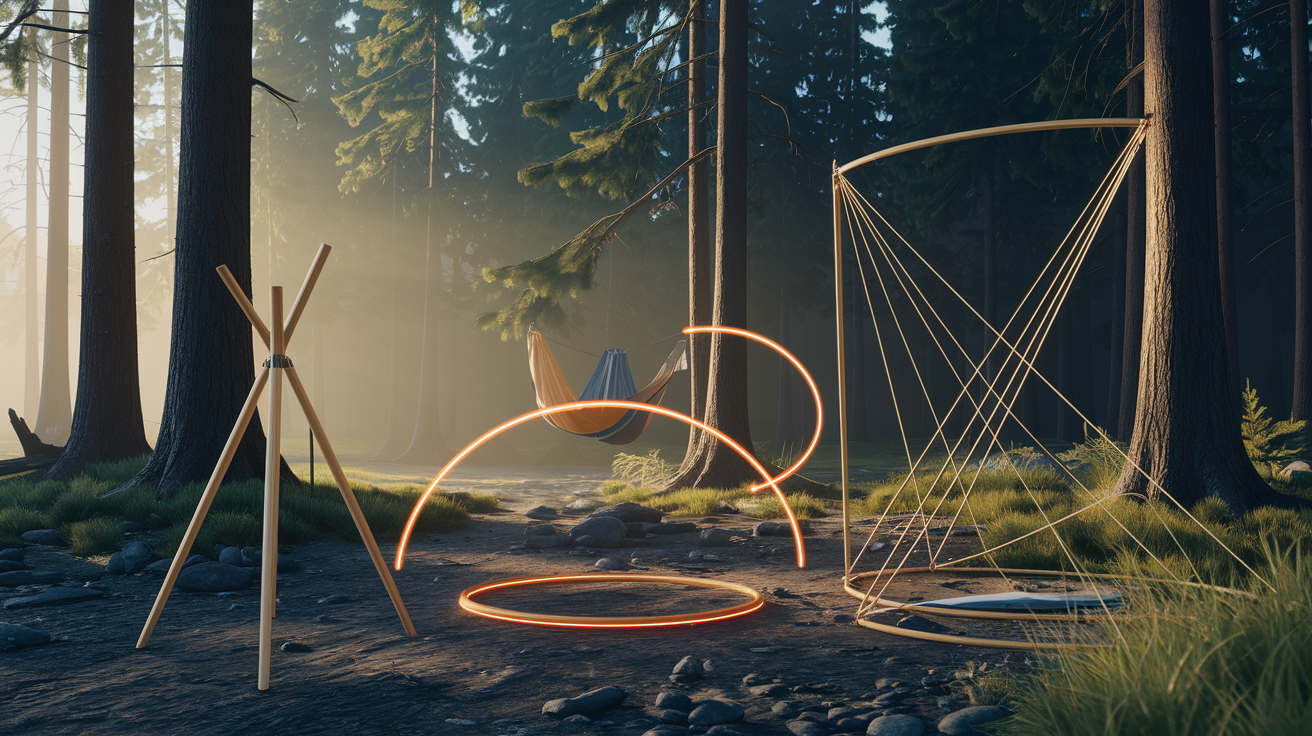
Tripod and rigid arch stands get grouped together sometimes, but they really only share one thing in common. Both use elevated structural supports to hold the hammock off the ground. A tripod does this with three legs and a top rail. An arch does it with curved or segmented frame members that carry the load along a completely different path. X frame and tensegrity systems work differently still, transferring weight through hinges or tensioned lines instead of a rigid skeleton.
Tripod and Rigid Arch Structures
A tripod’s biggest advantage is flexibility on uneven ground. Because each leg plants independently, you can adjust for a slope or a rock without needing a perfectly flat pad. A rigid arch doesn’t have that same forgiveness. It generally needs a flatter, firmer base, otherwise the frame can rock or twist under load.
Assembly looks different too. Tripods involve spreading the legs
Final Words
Heading into camp, choose the stand that fits: Handy Hammock is the only backpack option; Byer Vario, Portable Pipe Stand, and TurtleDog suit vehicle-supported trips. We compared weight, packed size, span, setup time, compatibility, anchoring, and whether a stand is freestanding or staked.
Match structure to terrain: tripods handle uneven ground, arches and X-frames prefer flat sites, and tensegrity systems need strong stakes. On sand use long or buried anchors and test anchors before use.
Use the portable hammock stand options for camping without trees checklist to pick the right fit. You’ll be set to relax.
FAQ
Q: How to hang a hammock if you have no trees and how do I make a DIY hammock stand for camping?
A: Hanging a hammock without trees or building a DIY stand uses a freestanding frame, vehicle or anchored poles, or a homemade pipe or tripod build—pick by weight, packed size, and stake needs.
Q: What is the best portable camping hammock stand?
A: The best portable camping hammock stand depends on your trip: Handy Hammock for backpacking (if you can stake), Byer Vario or Portable Pipe Stand for car camping when rigidity and tarp stability matter more than packed size.
Q: What is a Mexican hammock?
A: A Mexican hammock is a wide, handwoven, gathered-end hammock—usually cotton or a cotton blend—soft and breathable, designed to cradle the body without spreader bars and ideal for relaxed lounging and comfort.