

Think composting toilets are only for off-grid cabins?
For campers, the right unit comes down to three things: how much space you have, what you’ll spend, and how often you’ll use it.
This guide cuts through jargon and shows which models work best for weekend warriors, full-timers, and tight van builds, covering electric vs non-electric, compact vs full-size, and the trade-offs that matter.
If you’re short on time, start with the quick checklist in the next section.
Best Composting Toilets For Camping Right Now
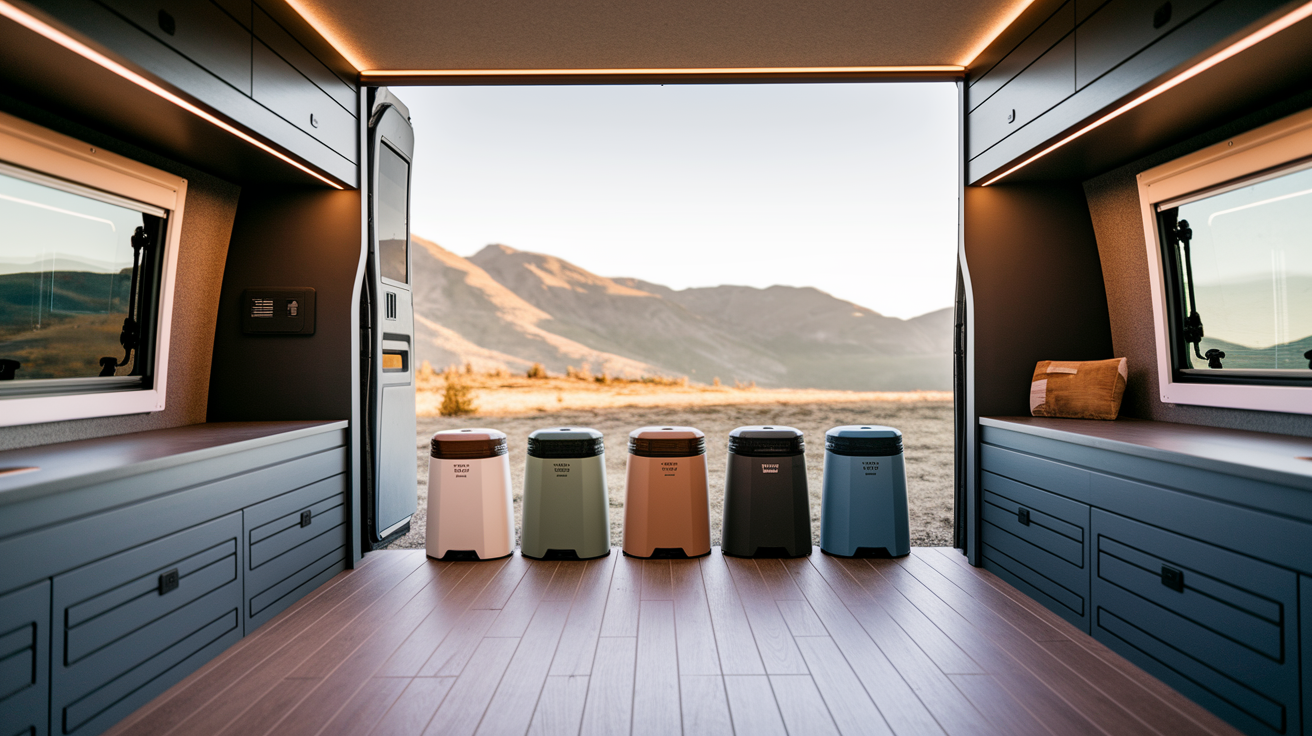
Picking the right composting toilet for your camper comes down to three things: how much space you’ve got, what you’re willing to spend, and how often you’ll actually use it. A weekend warrior has very different needs than someone living in a van full-time, and the models below reflect that range.
| Model | Best For | Weight | Price Range | Power Needed |
|---|---|---|---|---|
| Nature’s Head | Marine and RV reliability | 28 lbs | €500+ | Optional (fan) |
| Air Head | Largest solid capacity | 29 lbs | €500-1000+ | Optional (fan) |
| CompoCloset Cuddy | Humid climates, compact vans | 21 lbs | €500-700 | Yes (built-in fan) |
| Separett | Full-time off-grid durability | Varies by model | €300-600 | No (fan optional) |
| Kildwick Mini Loo | Compact vans on a budget | 8.2 kg | €350-600 | No |
| OGO | Modern automated features | 13 kg | €500-1000+ | Yes (fan + mixer) |
A few models stand out depending on what you care about most. Nature’s Head has more than 15 years of proven use on boats and in RVs, with a hand-crank agitator that’s simple and dependable. It’s the safe pick if you want something with a track record. Air Head wins on capacity, holding roughly 5 gallons of solids, the largest on the market, which is a real advantage for two people traveling for extended stretches without emptying.
If your build is tight on space and money, take a close look at the Kildwick Mini Loo. It’s shallow, light at 8.2 kg, needs no fan, and comes with a 5-year warranty, all while landing in a mid-range price bracket. Separett, on the other hand, is the choice for full-timers who care about spare-parts availability and long-term durability, backed by roughly 45 years of manufacturing history.
The sections below break down installation, maintenance routines, and full specs for each of these models, so you can match the details to your specific van or camper layout.
How Composting Toilets Work For Camper Setups
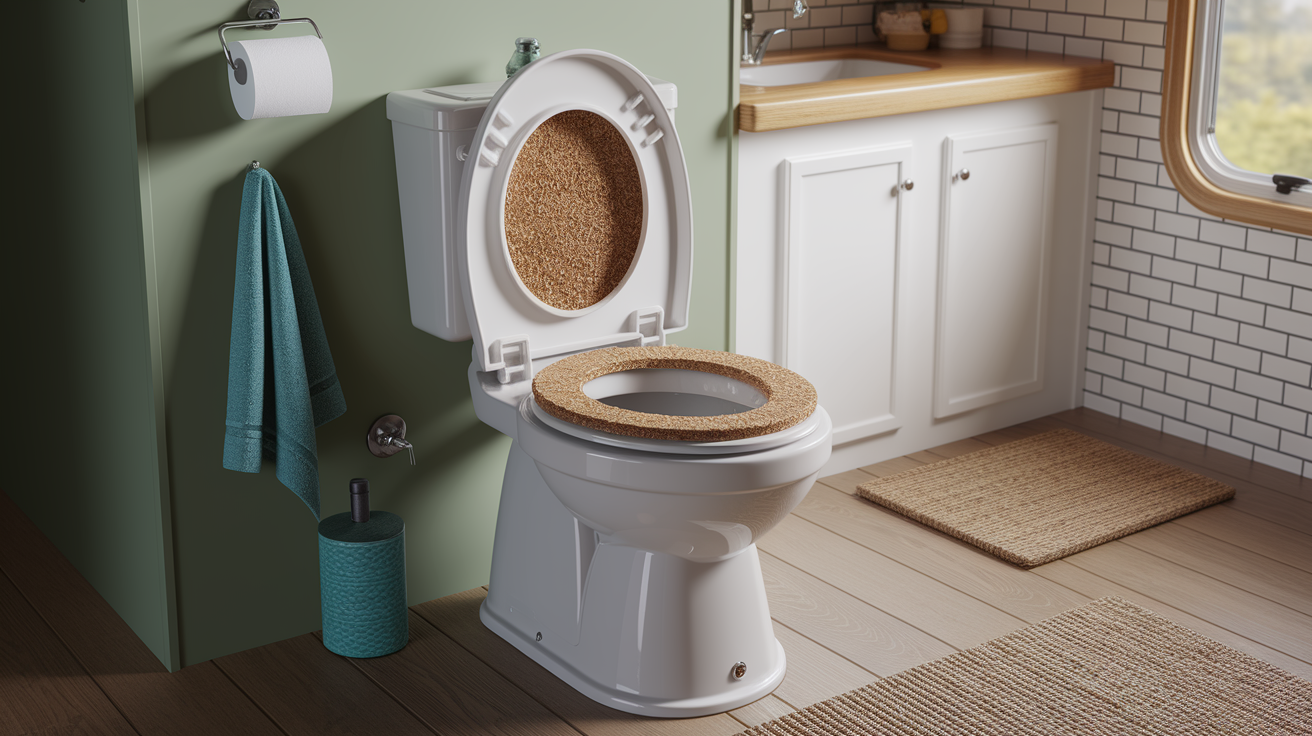
Composting toilets work by keeping urine and solids completely separate, and that separation is the whole secret to why they don’t smell. A urine diverter sits at the front of the bowl, directing liquid into its own container while solids drop into a separate chamber below. Urine and solids combine to create most of the odor in a standard toilet, so keeping them apart eliminates roughly 80 percent of the smell before it even starts. No water involved, no chemical additives needed. That’s part of why these systems have caught on so much in camper builds.
The solids side relies on carbon material to keep things dry and odor-free. Coconut coir, wood shavings, and peat moss are the most common choices, and each works by absorbing moisture and balancing the carbon-to-nitrogen ratio inside the chamber. Solids run high in nitrogen, so adding a carbon-rich material slows decomposition just enough to prevent ammonia smell while keeping the mixture dry rather than sludgy. A good rule of thumb: add a scoop of material after each use. That keeps the pile aerated and manageable until it’s time to empty.
Worth being clear here, most camper units don’t fully compost waste while it’s still in the toilet. The chamber is really just holding and drying the material until it’s full. Actual composting, if you choose to do it, usually happens afterward in a dedicated outdoor bin, or the waste gets bagged and disposed of through appropriate waste systems.
Electric Vs Non-Electric Composting Toilet Options
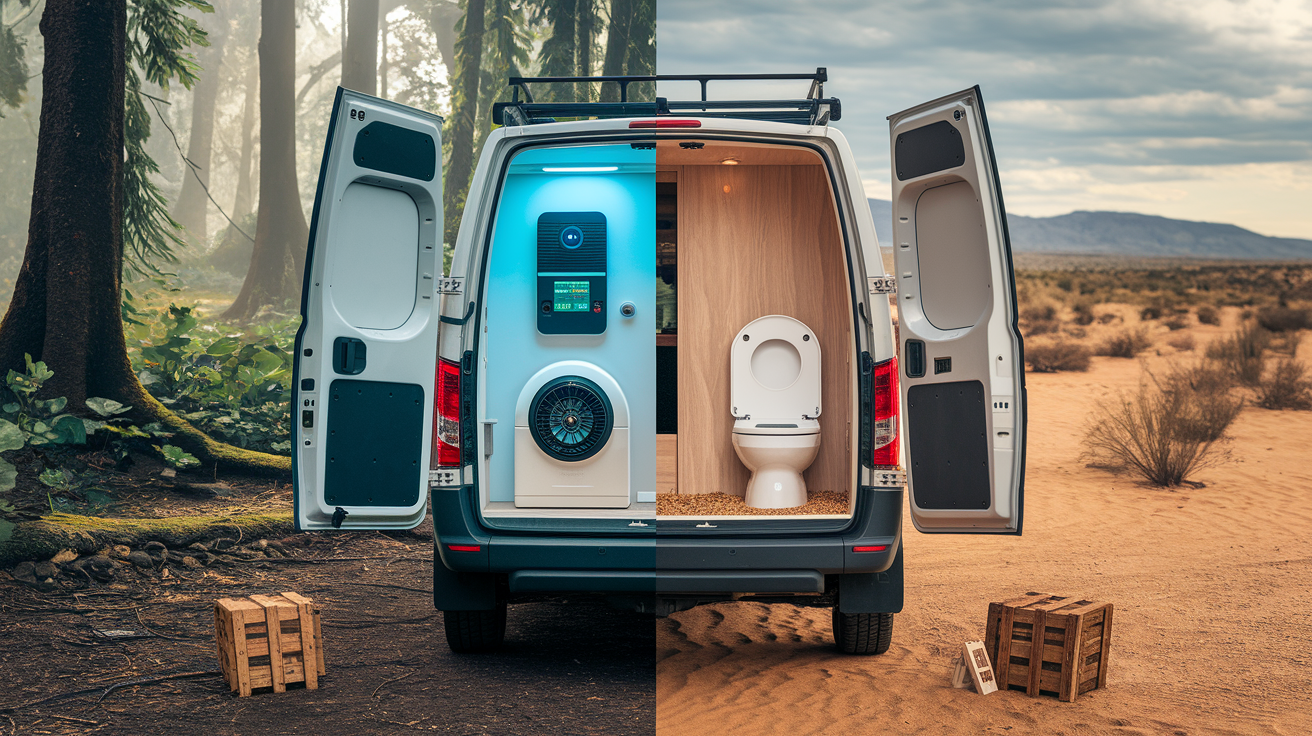
The main trade-off here is simple. Electric models offer stronger ventilation and added convenience, while non-electric models keep things simple and free you from worrying about power draw. Neither one is universally better, it really depends on what power setup you already have in your rig and what climate you’re camping in.
- Electric units like Cuddy and OGO use fan-assisted ventilation to actively pull moisture and odor out of the solids chamber, which helps a lot in humid conditions.
- OGO adds automatic mixing at the push of a button, so you’re not manually turning a crank after each use.
- Some electric models include LED indicators, like a pee-level light, that make emptying schedules easier to manage.
- Power draw is generally low, running on a 12V system, so it won’t drain a house battery quickly.
- Electric units are best suited for humid or tropical climates where passive airflow alone isn’t enough to keep the chamber dry.
- Running one long-term usually means you’ll want a solar setup or a reliable house battery, rather than relying on a single charge.
If you’re tent camping or building out a rig without solar, a non-electric option makes more sense. Nature’s Head’s hand-crank baseline, or budget-friendly builds like Boxio, rely on passive ventilation and carbon material instead of a fan, and they work just fine in drier climates. For vans and RVs that already have a battery system in place, though, an electric model like Cuddy or OGO adds a level of convenience that’s hard to ignore, especially if you’re parked somewhere sticky and humid for days at a time.
Compact Vs Full-Size Composting Toilets For Campers
Size matters more
Final Words
Choose by space, budget, and how often you camp. This post gave a quick shortlist with an HTML comparison table, then highlighted top picks: Nature’s Head for proven reliability, Air Head for big solid capacity, Kildwick Mini Loo for tight vans, and Separett for full-time off-grid use.
We also explained how urine-diversion and carbon materials control odor, and laid out electric vs non-electric trade-offs so you can match a unit to your power setup.
With these composting toilet options for campers, you can pick the right fit and enjoy cleaner, simpler trips.
FAQ
Q: What is the best composting toilet for a camper?
A: The best composting toilet for a camper depends on space, budget, and frequency: Nature’s Head for proven RV reliability, Air Head for largest solid capacity, Kildwick Mini Loo for tiny vans and budget setups.
Q: What are the pros and cons of a composting toilet for an RV?
A: The pros and cons of a composting toilet for an RV are: pros—no water use, low odor with urine separation, lower long‑term costs; cons—emptying and maintenance, higher upfront price, possible fan/power needs.
Q: What if you have diarrhea in a composting toilet?
A: If you have diarrhea in a composting toilet, treat it as excess-liquid waste: add extra dry carbon (sawdust or coir), run ventilation, and if contents are very watery, transfer to sealed bags for proper disposal.
Q: Do you throw toilet paper in a compost toilet?
A: You can throw toilet paper in a compost toilet if it’s biodegradable and used sparingly; add extra carbon after use, and avoid flushable wipes or non‑compostable paper unless the manufacturer allows it.