

Think boondocking is just roughing it? Think again.
Boondocking means camping without hookups, and the real skill is balancing power, water, and waste so you stay comfortable longer.
If you own an RV and want freedom from crowded campgrounds, this guide gives the basics you must know: how batteries, solar, and generators work; how to stretch fresh water and find safe refills; and how to manage gray and black tanks without drama.
Read on to learn simple upgrades and habits that let you stay off-grid for days, not hours.
Boondocking Utility Basics At A Glance
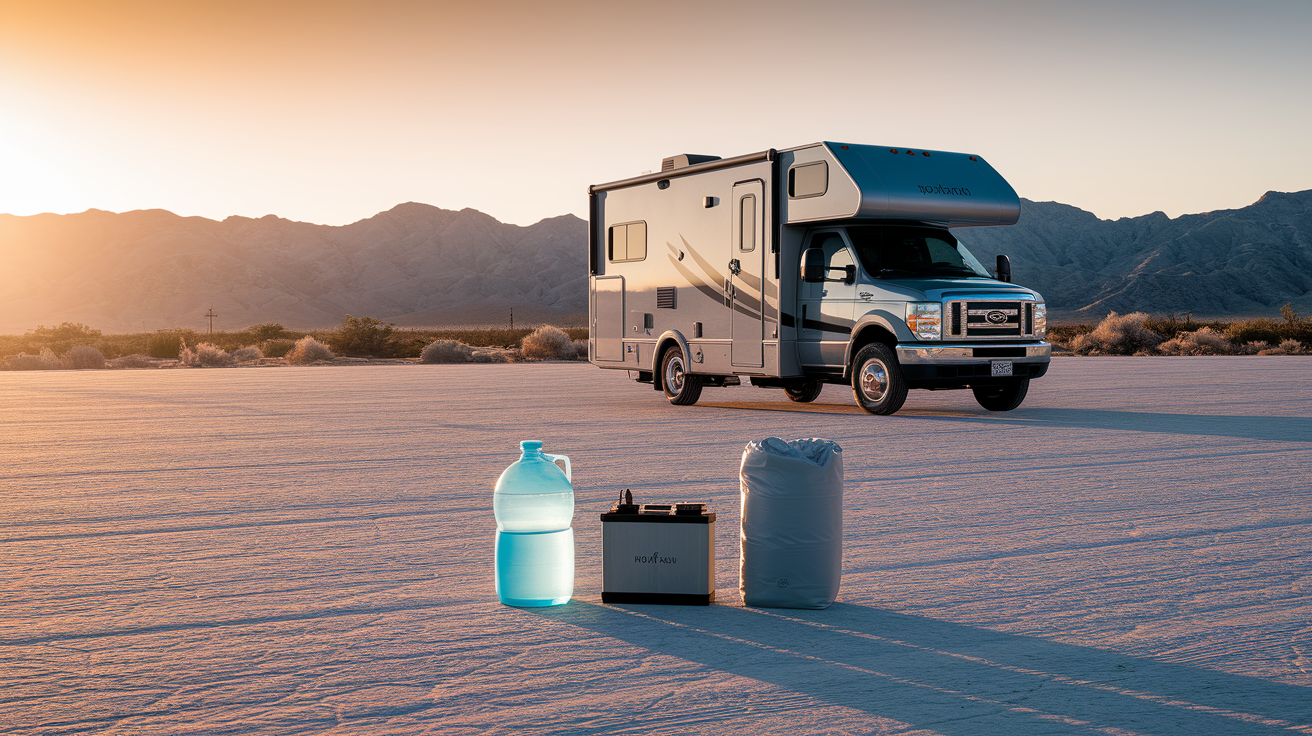
Boondocking means camping without water, sewer, or electrical hookups, usually on public land far from any campground office. Dry camping is a close cousin, but it often happens in an established park that just lacks hookups at your specific site, sometimes for a fee. Dispersed camping is a more specific term for boondocking on public land, like national forests or Bureau of Land Management acreage, where there’s no designated site at all. Once you understand the differences, the real question becomes: what do you actually need to make it work?
Every boondocking trip rests on three utility pillars: power, water, and waste. A stock RV with two 12 volt house batteries typically gives you 2 to 4 days of conservative use before you need to recharge. A 40 gallon fresh water tank can stretch past 4 days for two people if you’re strict about conservation. Waste tanks tend to be the real limiting factor, since gray water from a 5 to 10 minute shower can fill that tank in as little as 1 to 2 days. Most public land locations allow stays of up to 14 days, so your equipment and habits, not the calendar, usually determine how long you can stay put.
Before you roll out, run through this readiness checklist:
- Batteries charged and capable of running lights, the water pump, and propane heat for at least 1 to 2 days
- Fresh water tank topped off completely
- Gray and black tanks emptied before you leave
- Propane powered refrigerator in place (electric fridges drain batteries fast)
- Water filtration on hand for refills from unknown sources
- A plan for where the nearest dump station is, just in case
Duration isn’t fixed. It bends around your conservation habits and whatever upgrades you’ve made to your rig, whether that’s a bigger battery bank, solar panels, or a portable waste tank. The rest of this guide breaks down exactly how each system works and where to invest first.
Power Systems For Boondocking: Batteries, Solar, And Generators
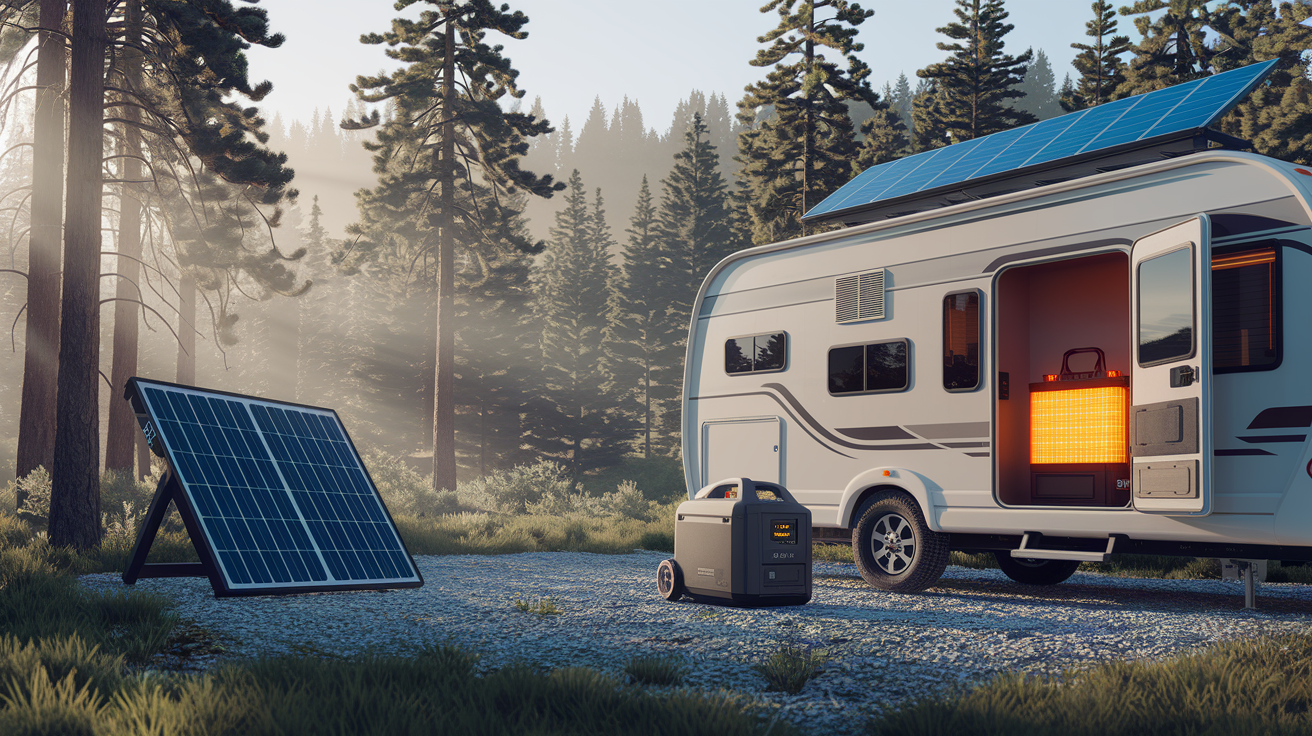
Most factory RVs come with two 12 volt house batteries, which is enough for roughly 2 to 4 days of conservative use covering lights, the water pump, and basic electronics. That’s a fine starting point, but it’s also the first thing most boondockers upgrade once they realize how quickly batteries drain when you’re not paying attention.
Battery Types And Capacity
Lead acid batteries are the standard factory option, affordable but heavier and less efficient at deep discharge. Lithium batteries cost more upfront but handle deeper discharge cycles without the same wear, and they weigh less too. A common mid-range upgrade is swapping to six volt golf cart batteries wired in series, which increases your total storage capacity without a full lithium investment. Whatever you choose, a voltmeter is your best friend for knowing where you actually stand.
Solar Setups
Portable solar panels cost a couple hundred dollars and work well for basic loads, especially if you can angle them toward direct sun and move them throughout the day. Rigid rooftop panels are a more permanent option, wired through a charge controller. MPPT controllers squeeze more efficiency out of your panels than PWM controllers, especially in partial shade or cooler weather, though they cost more. Solar still produces charge on cloudy days, just at lower output, so don’t assume a gray sky means zero power.
Generators
Generators fill the gap when solar isn’t enough. Inverter generators are worth the extra cost because they produce cleaner power, safer for sensitive electronics. Expect around $600 for a 2,500 watt inverter generator and $1,200 or more for 3,500 watt models. Charging via generator or shore power typically takes 6 to 10 hours. Keep in mind that many campgrounds and dispersed sites have quiet hours or outright ban generator use overnight, so check local rules first.
A few voltage guidelines worth memorizing:
- 12.6 volts or higher means your battery is fully charged
- 11.8 volts is your recharge target, ideally before you drop further
- 11.6 volts means the battery is essentially discharged
- Recharging before you hit 80% discharge extends battery lifespan significantly
- A cheap voltmeter from any auto parts store is enough to monitor all of this
For extended stays, most experienced boondockers combine all three: a solid battery bank, solar for daily topping off, and a generator as backup for cloudy stretches or high draw days.
Inverters And Managing Electrical Loads Off-Grid

An inverter converts your 12 volt DC battery power into 120 volt AC, which is what lets you plug in regular household electronics. But here’s the catch: AC appliances typically draw roughly 10 times the power of their DC equivalents. Without an inverter, none of your 110V outlets work at all. Even with one installed, things like air conditioning, microwaves, and electric heaters usually draw too much power to be practical off grid, unless you’re running a generator at the same time.
The trick to boondocking successfully is grouping your high draw tasks together during generator runs, rather than spreading them out and running the generator all day. A few tactics that actually work:
- Run the microwave while someone’s in the shower, since the generator’s already warmed up
- Use the coffeemaker while the furnace is running, instead of as a separate task
- Turn off lights, TVs, and radios the moment you’re not using them
- Follow a natural daylight schedule instead of relying on artificial lighting after dark
- Swap to rechargeable battery operated reading lights instead of overhead fixtures
- Keep spare batteries on hand for flashlights and small electronics
- Switch to LED lighting throughout the rig, since it uses a fraction of the power of incandescent bulbs
Once you’ve got your habits locked in, it helps to actually calculate your rough amp hour budget. Start by estimating daily draw: LED lights might use half an amp hour each per evening, a water pump a few amp hours per use, and a propane fridge’s electric components maybe 20 to 30 amp hours per day depending on the model. Add those up, compare it against your battery bank’s total capacity, and you’ll have a realistic sense of how many days you can stretch before needing a recharge.
Final Words
Set up power, top off fresh water, and plan your dump. Those are the basics you need before heading off-grid.
We covered battery and solar choices, inverter limits and load management, and simple water-conservation tricks. Follow the six-point readiness checklist: charged batteries, full fresh tank, empty waste tanks, propane fridge, filter, and a dump plan, and you’ll be prepared for a short stay.
With this foundation, boondocking for RVs: power water and dumping basics feels manageable. Start with the checklist and you’ll camp with more confidence.
FAQ
Q: What is the 3-3-3 rule for RVs?
A: The 3-3-3 rule for RVs is not a single standard; many RVers use it as a simple prep guide—plan three days off-grid, carry three key spares (battery/water/propane), and check three systems before leaving.
Q: Do you leave the water pump on while boondocking?
A: You should keep the water pump off while boondocking unless you’re using water; leaving it on drains batteries and can hide leaks—run it only when drawing water or rely on a demand/pressure switch.
Q: What are the seven C’s of camping?
A: The seven C’s of camping are a packing mnemonic: clothing, cooking gear, cover (shelter/tarp), cutting tool, containers (water), cordage (rope), and care items (first-aid/comfort).
Q: What does FF mean in camping?
A: FF in camping usually means “full facilities”—sites with toilets, potable water, and other services—but it isn’t universal, so verify the campground’s legend or ask before you book.